MarketPedia Inc.™
Politics · 21 November 2026
PoliticsInvestigation
Taiwan flags nearly 2,700 accounts in China influence probe
Officials say coordinated Threads clusters, AI-generated videos and a sprawling disinformation caseload are reshaping the fight over trust before the November 28 vote.
Taiwan's government told Meta on Thursday that nearly 2,700 accounts on its Threads platform were part of a suspected Chinese effort to sway voters ahead of local elections on November 28. Officials said 74% of the flagged accounts listed China as their declared location, 25% disclosed no location at all, and 1% listed Russia. It is the clearest public accounting yet of how Taipei is building its case against what officials describe as an outside influence campaign.
Meta confirmed it had removed every account Taiwan flagged. "None of these 'low-quality fake accounts' had posted about election-related topics and most had no followers," a company spokesperson said, adding that many had already been disabled by its internal systems before the government's report arrived. The wording leaves a gap. If the accounts Meta removed carried no election content and had barely any followers, the more active material Taiwanese investigators say they found, political posts, AI-generated video, measurable engagement, may sit in a different layer of the same operation, one Meta's statement does not directly address.
A manufactured swarm
The accounts were not scattered noise, according to the government's findings. Investigators traced them to 27 clusters sharing similar Chinese names and sequential numerical identification numbers, a pattern consistent with batch creation rather than the slow, organic growth of ordinary accounts.
About 260 of the accounts posted more than 2,150 AI-generated videos, which together drew 2.35 million interactions before removal. Reporting on the government's findings describes a familiar playbook. An account opens around an apolitical interest, fortune-telling is one example cited, builds a following over time, then pivots into political criticism and messaging meant to discourage people from voting. It is a slow build with a late turn, designed to look nothing like coordinated messaging until the moment it does.
Taiwanese officials have not said how many of the 2,150 videos came from the same 27 clusters, nor whether the clusters behind the AI-generated material overlap with the "low-quality fake accounts" Meta says it removed. Meta's own description, that the accounts it took down carried no election content, suggests the company may be describing a more dormant layer of the operation than the one investigators flagged as most active.
Two weeks of mounting evidence
The Threads numbers did not appear out of nowhere. On November 4, Kuo briefed reporters on the disinformation picture building through the autumn. By November 13 the U.S.-China Economic and Security Review Commission had published its Taiwan chapter, and by November 16 police had logged 251 disinformation cases. Reporters Without Borders published its own account of interference cases on November 19, a day before the Threads figures reached Meta.
A widening dragnet
The Threads sweep sits inside a far larger caseload. Taiwan's Criminal Investigation Bureau has identified roughly 30 suspected cases of foreign election interference this cycle, three of which have been referred to prosecutors and involve 15 suspects, said Chiu Shao-chou, the bureau's commissioner. Those three cases, and the 15 named suspects, mark the only point so far where the investigation has produced identifiable individuals rather than anonymous account clusters.
Police have gone further on disinformation generally, independent of any single platform. As of November 16, officers had handled 251 cases of election-related disinformation, referring 193 individuals in 154 of those cases to prosecutors. Taiwan's National Security Bureau separately told the Legislative Yuan in October that it had traced more than 2.5 million controversial online messages to China in the first nine months of 2026.
"We have also found that there are foreign forces relying on the spread of disinformation, and even using transnational repression to interfere with the elections," said Kuo Shih-Chieh, deputy director-general of the National Police Agency, at a briefing on November 4. He did not specify, in the remarks reviewed for this report, which cases among the hundreds then under review involved transnational repression rather than disinformation alone.
Who is behind it, and who can prove it
Attribution is the weak link in the official account. The Criminal Investigation Bureau says perpetrators routinely use virtual private networks to mask their origin, which complicates any direct line from an account or a video back to the Chinese state, as opposed to a proxy, a contractor, or an independent actor acting on Beijing's behalf.
The pattern itself argues for coordination. Matching naming conventions across 27 clusters and a concentration of self-reported locations in China point toward organised activity rather than a coincidence of individual accounts behaving alike. But organised by whom, and with what degree of state direction, is a separate question the account data alone cannot answer. Taiwanese investigators have not closed that gap, and nothing in the material reviewed for this report claims they have.
The U.S.-China Economic and Security Review Commission, in a chapter on Taiwan published on November 13, places this kind of activity inside a broader shift toward grey-zone pressure, tactics short of open conflict meant to erode confidence in Taiwan's institutions over time rather than swing any single election outright. The chapter is part of the commission's annual report to the U.S. Congress, which treats Taiwan's information environment as a test case for how Beijing calibrates pressure short of conflict. The commission's chapter offers no vote-level estimate of effect. None exists yet from Taiwanese authorities either.
Whether the campaign has moved any actual votes is an open question for a simple reason: the data to answer it does not exist yet. Election day is seven days off, turnout figures will not appear until after the polls close, and no official body in the material gathered for this report has published a measurable link between disinformation volume and voter behaviour.
Security footing ahead of the vote
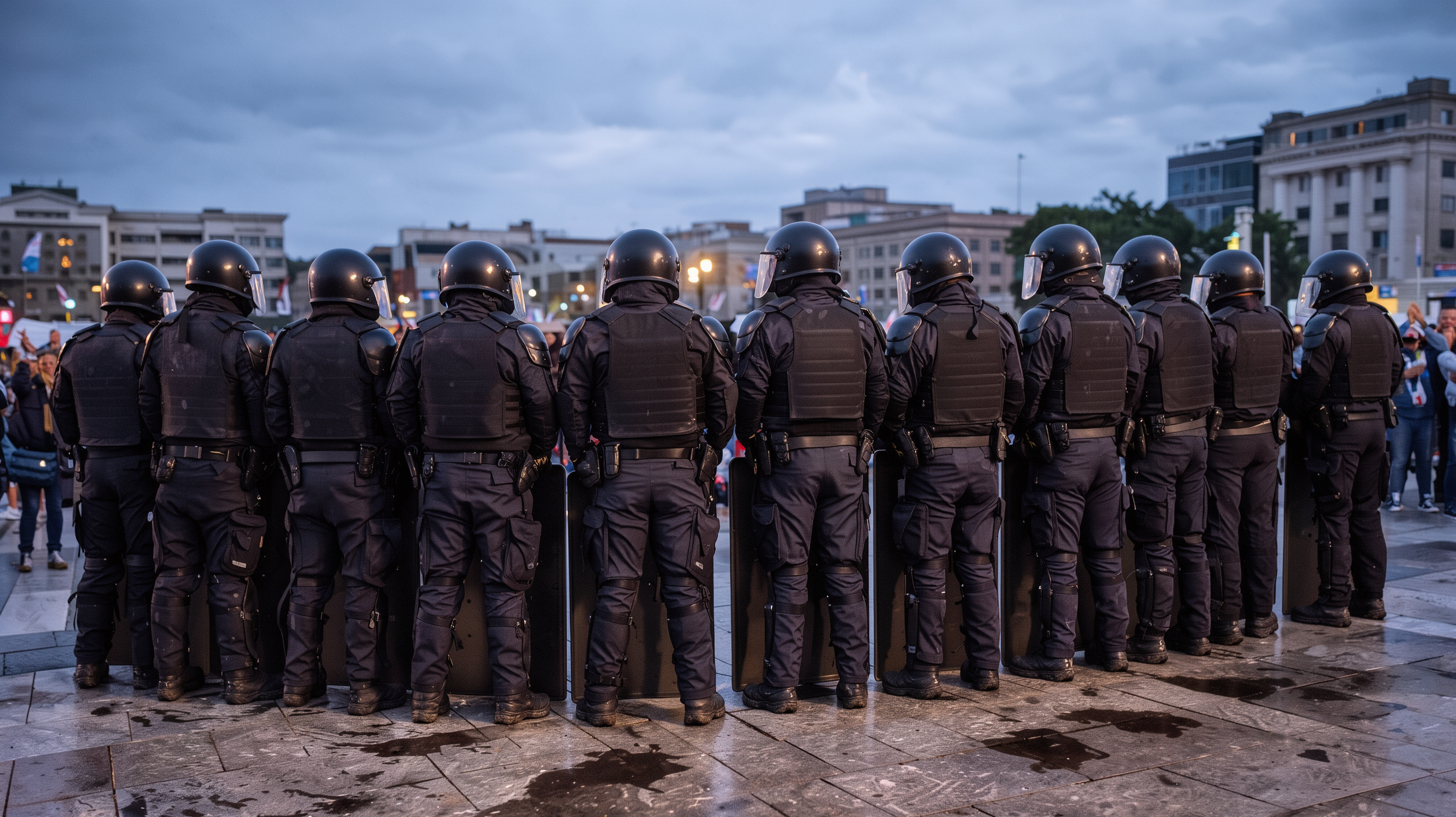
Taiwan is not treating the problem as abstract. More than 46,000 police officers are scheduled for deployment around the November 28 elections, a figure officials say reflects both the disinformation caseload and standard polling-day security planning.

Reporters Without Borders, in a report published on November 19, describes Taiwan as absorbing a larger volume of information operations than in prior election cycles, citing the 2.5 million flagged messages and the police referral numbers as evidence. The organisation's framing treats scale itself as the story: an environment where disinformation is the baseline expectation, and the live question is how much of it gets caught before polling day.
Whether platform moderation can keep pace with clusters that reform after each takedown is a separate matter the current figures do not settle. Meta removed nearly 2,700 accounts this week. Nothing in its statement, or in the government's, suggests that number is final.
Officers are still adding to the tally. The 251 disinformation cases logged by November 16 and the 30 foreign-interference cases identified by the Criminal Investigation Bureau are counts as of specific dates, not final totals, and neither police nor Meta have said the clusters behind them have stopped posting.